Biodiversity Convention: Seed, Soil & Millets

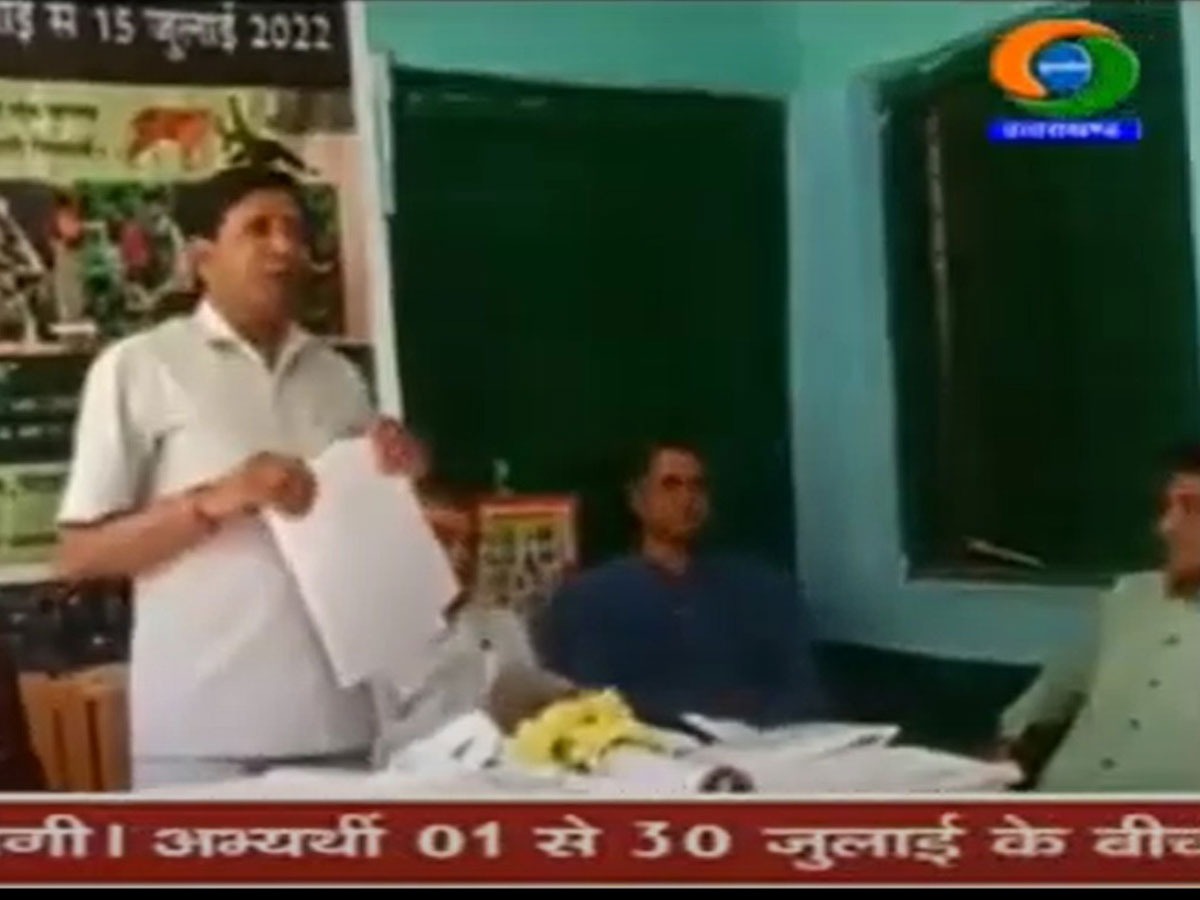
जैव विविधता सम्मेलन बीज, मिटटी एवं मिलेटस पर हुई चर्चा

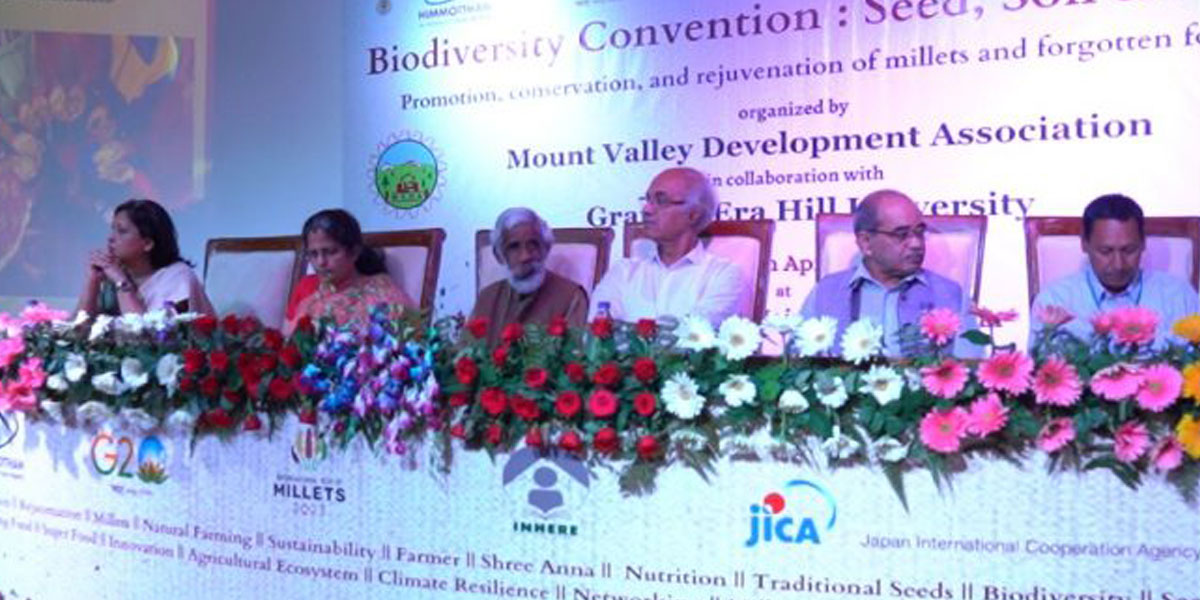
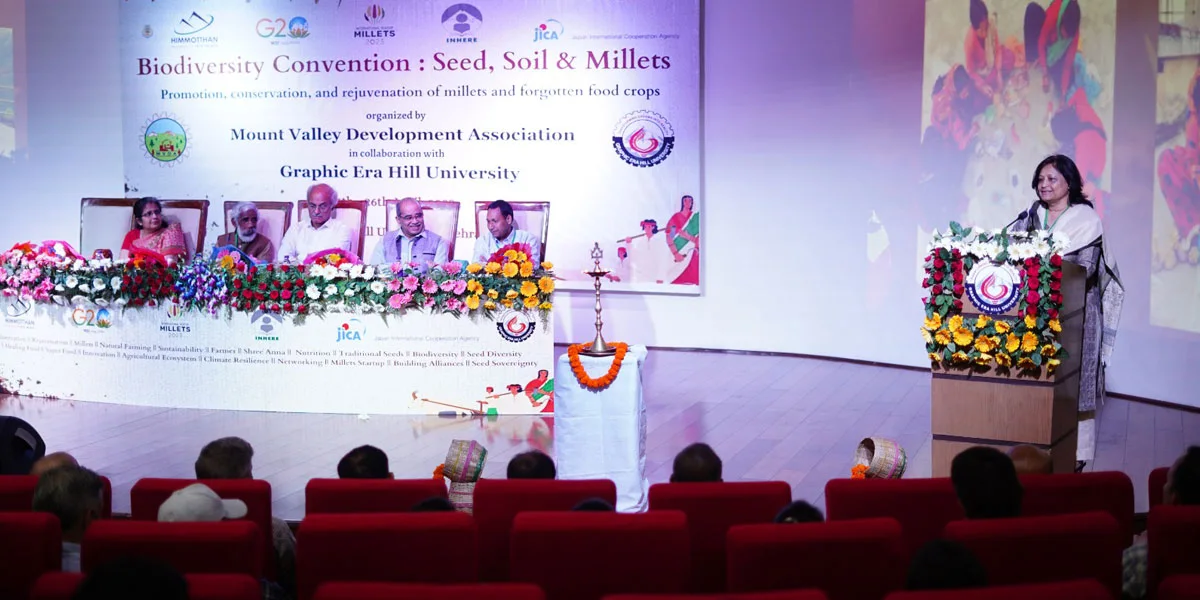
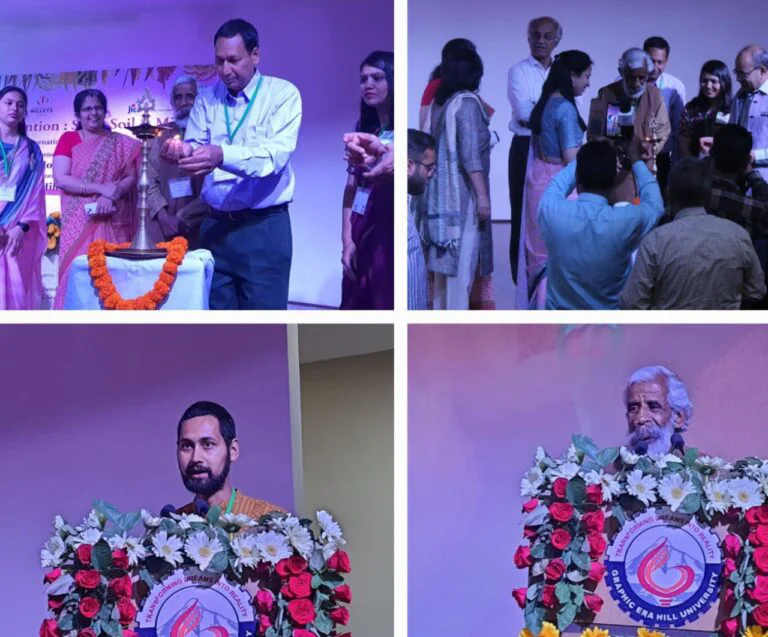
अन्तर्राष्ट्रीय बीज दिवस के अवसर पर माउंट वैली डेवलपमेंट एसोसियशन और ग्राफिक ईरा हिल विश्वविद्यालय के संयुक्त तत्वाधन में परम्परागत कृषि और जैव विविधता विषय को लेकर दो दिवसीय सेमीनार का आयोजन किया गया है।

अन्तर्राष्ट्रीय बीज दिवस के अवसर पर माउंट वैली डेवलपमेंट एसोसियशन और ग्राफिक ईरा हिल विश्वविद्यालय के संयुक्त तत्वाधन में परम्परागत कृषि और जैव विविधता विषय को लेकर दो दिवसीय सेमीनार का आयोजन किया गया है। इस दौरान किसानों महिलाओं, शोधकर्ताओं, छात्रो, उद्यमियों और उपभोक्ताओं सहित अनेक हितधारको को एक दूसरे से सीखने, टिकाउ एवं सतत कृषि के लिए नये नये नवाचरो के आदान प्रदान पर वृहद चर्चा हुई है। विशेषज्ञो ने कहा कि स्वस्थ स्वास्थ्य के लिए मोटे अनाज ही आज की आवश्यकता है। इसलिए हिमायल जैसे राज्यों में प्रकृति आधारित और परम्परागत कृषि को बढावा दिया जाना चाहिए। मिलेट्स वर्ष में यह कार्य नियमित हो जाना चाहिए।

दो दिवसीय सेमीनार के दौरान चर्चा के मुख्य बिंदुओ में परम्परागत बीज, कृषि, जैव विविधता को बढाना, जलवायु के अनकूल फसलो को उगाना, मिटटी सहित प्राकृतिक संसाधनो के सामजस्य बाबत उत्पादकता को बढाने पर विचार विर्मश किया गया है। महिलाओं ने सवाल उठाया कि उतराखण्ड में कृषि की जमीन सर्वाधिक बिकने की कगार पर आ चुकी है। यह बात भी खुलकर सामने आई कि परम्परागत बीज भी परम्परागत खेती और मोटे अनाज को विकसित करने और उत्पादकता क्षमता बढाने के लिए आवश्यक है। प्रश्न आया कि मोटे अनाजो के लिए बाजार आज भी सुलभ नहीं हैं।

इस दौरान बायोडायवर्सिटी कन्वेंशन सीड, सॉइल एंड मिलेट्स विषय पर बीज बचाओ आन्दोलन के प्रणेता विजय जड़धारी ने कहा कि आज अब आवश्यकता हो गई है मोटे अनाज के संरक्षण की। दुनियाभर में मोटे अनाज को बचाने के लिए लोग आगे आ रहे है। यही मांग वे वर्षो से कर रहे थे। स्वस्थ स्वास्थ्य के लिए मोटे अनाज का भोजन ही अनिवार्य है। इससे आगे परमपरागत बीज को संरक्षण करने की प्रबल आवश्यकता है। उनके पास उतराखण्ड के सैकड़ो परम्परागत बीज संरक्षित है। मगर सभी के घर में बीज संरक्षित हो तब जाकर हम किसी सफलता तक पंहुच पायेंगे। बतौर मुख्य अतिथि श्री जड़धारी ने कहा कि खेती व्यापार नहीं हमारी संस्कृति हैं। पुराने बीजों को बचाना एक चुनौती है। बीजों का भी अपना वंश होता है, उसे उजाड़ना एक अपराध है। कहा कि कोरोना ने लोगों को कृषि और मिलेट्स की अहमियत बता दी है। उन्होंने कहा कि मिलट्स पौष्टिक होने के साथ इम्यूनिटी बढ़ाने के लिए बेहतरीन हैं। उन्होंने कहा कि उत्तराखंड में जंगली जानवर और मौसम खेती के सबसे बड़े दुश्मन हैं और सरकार को इसके लिए कुछ कदम उठाने चाहिए। बीजों की मूल वैरायटी बहुत शक्तिशाली होती हैं। किसी भी तरीके के बदलाव को यह सह सकती हैं। उन्होंने शंका जाहीर की है कि बीजों के जीनोम में बदलाव करके वैज्ञानिक कंपनियां हमें हाइब्रिड बीजों का गुलाम बना रहीं हैं।

हिमाचल प्रदेश से आये पद्मश्री नेकराम शर्मा ने कहा कि हिमाचल और उतराखण्ड का भूगोल एक जैसा ही इसलिए यहां पर कृषि और अन्य फसलो के लिए सरकारो को खास योजना बनानी चाहिए। उन्होने कहा कि हिमालय राज्यों की परम्परागत खेती की आज आवश्यकता बढ रही है, यही सुखद है। पहाड़ पर जंगली जानवरो का जो खतरा है उससे निपटने के लिए भी परम्परागत तौर तरिके है। अर्थात परम्परागत खेती और बीज के लिए ही अनिवार्य योजना बनाई जाये। जिसे बाजार से भी जोड़ा जाये। उन्होने कहा कि वे वर्षो से परम्परागत खेती करते आये है। कई बार उनकी मजाक उड़ाई गई मगर वे अपने मिशन पर जुड़े रहे। आज सरकार और स्थानीय किसान उनकी परम्परागत कृषि का अनुसरण कर रहे है। उन्होने खुद का सफल उदाहरण दिया कि उनके अनार के बगीचे में जो कीट पैदा होते है उनसे अनार को बचाने के लिए वे प्राकृतिक साध नही उपयोग मे लाते है। वे कभी भी कीटनाशक चीजो को इस्तेमाल नही करते हैं।

पद्श्री कल्याण सिंह रावत ने कहा कि उतराखण्ड में प्राकृतिक खेती होती आई है। हरित क्रान्ती के आने के बाद देश के किसानो की परम्परागत खेती में बिखराव आया है। इसलिए लोगों को फिर से प्राकृतिक खेती की ओर लौटना पड़ेगा। यहीं से मोटे अनाजो के संरक्षण की शुरूआत होती है। ग्राफिक ईरा विश्वविद्यालय के एसोसिएट डीन एग्रीकल्चर प्रो0 वाई. पी. सिंह, वन्य आर्गेनिक से सुप्रिया, रूद्र एग्रो स्वायत सहकारिता के प्रमुख नरेश नौटियाल, कृषि परामर्शदाता कुलदीप उनियाल, समाजिक कार्यकर्ता समीर रतूड़ी, एससीएच कन्सलटिंग के अरविन्द रावत, त्रिशूली प्रड्यूशर कम्पनी की जगदीश जोशी, माउन्ट वैली डेवलपमेंट एसोसियशन के संस्थापक अवतार नेगी, श्रमयोग संस्था के अजय जोशी, पीएसआई के पूरण बर्त्वाल, डा0 विनोद भट्ट आदि विशेषज्ञो ने अपने विचार व्यक्त किये।

माउंटे वैली डेवलपमेंट ऐशोसियशन के समन्वयक नवप्रभात ने बताया कि बीज हमारी सांस्कृतिक विरासत है। इसे बचाने के लिए हम सभी को मिलकर परंपरागत बीज सरंक्षण के लिए अपने अपने स्तर पर कार्य करना होगा। साथ ही समुदाय व विभिन्न हितधाराको के लिए आवश्यक सुविधा बढ़ने में संयुक्त प्रयास करने होंगे। इस सेमिनार में ऐसे संयुक्त नेटवर्किंग के लिए कार्ययोजना बनानी है। आई एम आई की कोषाध्यक्ष बिनीता शाह ने कहा कि उत्तराखंड में मिट्टी, बीज और मिलेट्स का संरक्षण पर्वतीय क्षेत्रों के विकास का आधार है। जरूरत है कि हम मडुवा जैसे एक अनाज पर नहीं बल्की हर तरह की मलेट्स पर ध्यान दें। विश्वविद्यालय के प्रो. चांसलर डॉ. जे. कुमार ने कहा कि ग्राफिक एरा हिल यूनिवर्सिटी में 2017 में शुरू हुआ स्कूल ऑफ एग्रीकल्चर रिसर्च किसानों की समस्याओं के समाधान ढूंढने का काम भी करता आया है। कृषि के क्षेत्र में स्टार्टअप्स की जरूरत है। उत्तराखंड की पारंपरिक बारह अनाजा कृषि पद्वत्ति के बारे में बताते हुए उन्होंने कहा कि हमारे पूर्वज मिट्टी की फर्टिलिटी की अहमियत जानते थे। हमें इस धरोहर को आगे ले जाना है। माउंट वैली डेवलपमेंट अथॉरिटी के श्री नवप्रभात ने समेल्लन के उद्देश्य और महत्व पर प्रकाश डाला। विश्वविद्यालय के डायरेक्टर जनरल डॉ. एच. एन. नागराजा, वाइस चांसलर डॉ. आर. गौरी कार्यक्रम में उपस्थित रहे। सेमीनार के प्रथम दिवस का संचालन डॉ. हिमानी बिंजोला, द्वीतिय दिवस का संचालन ऋतु सोघानी ने किया है।

इस अवसर पर विभिन्न किसानों द्वारा स्थानीय उत्पादों की प्रदर्शनी, क्रेता, विक्रेताओ का आपसी मेल, फील्ड स्तर पर किये गये अध्ययनों का प्रस्तुतिकरण, बीजों की प्रदर्शनी व स्थानीय व्यंजनो की प्रदर्शनी आदि कार्यक्रम प्रस्तुत किये गये। उल्लेखनीय हो कि उत्तराखंड में फसल चक्र को अपनाने व बारहनाजा और मिश्रित खेती की पुरानी परंपरा है। बीज के सरंक्षण के उत्तराखंड में परम्परा रही है। हाइब्रिड को इसके लिए खतरा बताया गया है। इस दौरान सेमिनार में देशभर के कृषि वैज्ञानिक, परंपरागत खेती के जानकर और अन्य हितधारी सम्मिलित हुए है।

माउंट वैली एसोसिएशन की पहल से ग्राफिक ईरा हिल विश्वविद्यालय में जैव विविधता मिलेट्स और मिट्टी पर शोधकर्ताओं ने 2 दिन तक किया गहन मंथन

अन्तर्राष्ट्रीय बीज दिवस के अवसर पर माउंट वैली डेवलपमेंट एसोसियशन और ग्राफिक ईरा हिल विश्वविद्यालय के संयुक्त तत्वाधन में परम्परागत कृषि और जैव विविधता विषय को लेकर दो दिवसीय सेमीनार का आयोजन किया गया है।

अन्तर्राष्ट्रीय बीज दिवस के अवसर पर माउंट वैली डेवलपमेंट एसोसियशन और ग्राफिक ईरा हिल विश्वविद्यालय के संयुक्त तत्वाधन में परम्परागत कृषि और जैव विविधता विषय को लेकर दो दिवसीय सेमीनार का आयोजन किया गया है। इस दौरान किसानों महिलाओं, शोधकर्ताओं, छात्रो, उद्यमियों और उपभोक्ताओं सहित अनेक हितधारको को एक दूसरे से सीखने, टिकाउ एवं सतत कृषि के लिए नये नये नवाचरो के आदान प्रदान पर वृहद चर्चा हुई है। विशेषज्ञो ने कहा कि स्वस्थ स्वास्थ्य के लिए मोटे अनाज ही आज की आवश्यकता है। इसलिए हिमायल जैसे राज्यों में प्रकृति आधारित और परम्परागत कृषि को बढावा दिया जाना चाहिए। मिलेट्स वर्ष में यह कार्य नियमित हो जाना चाहिए।

दो दिवसीय सेमीनार के दौरान चर्चा के मुख्य बिंदुओ में परम्परागत बीज, कृषि, जैव विविधता को बढाना, जलवायु के अनकूल फसलो को उगाना, मिटटी सहित प्राकृतिक संसाधनो के सामजस्य बाबत उत्पादकता को बढाने पर विचार विर्मश किया गया है। महिलाओं ने सवाल उठाया कि उतराखण्ड में कृषि की जमीन सर्वाधिक बिकने की कगार पर आ चुकी है। यह बात भी खुलकर सामने आई कि परम्परागत बीज भी परम्परागत खेती और मोटे अनाज को विकसित करने और उत्पादकता क्षमता बढाने के लिए आवश्यक है। प्रश्न आया कि मोटे अनाजो के लिए बाजार आज भी सुलभ नहीं हैं।

इस दौरान बायोडायवर्सिटी कन्वेंशन सीड, सॉइल एंड मिलेट्स विषय पर बीज बचाओ आन्दोलन के प्रणेता विजय जड़धारी ने कहा कि आज अब आवश्यकता हो गई है मोटे अनाज के संरक्षण की। दुनियाभर में मोटे अनाज को बचाने के लिए लोग आगे आ रहे है। यही मांग वे वर्षो से कर रहे थे। स्वस्थ स्वास्थ्य के लिए मोटे अनाज का भोजन ही अनिवार्य है। इससे आगे परमपरागत बीज को संरक्षण करने की प्रबल आवश्यकता है। उनके पास उतराखण्ड के सैकड़ो परम्परागत बीज संरक्षित है। मगर सभी के घर में बीज संरक्षित हो तब जाकर हम किसी सफलता तक पंहुच पायेंगे। बतौर मुख्य अतिथि श्री जड़धारी ने कहा कि खेती व्यापार नहीं हमारी संस्कृति हैं। पुराने बीजों को बचाना एक चुनौती है। बीजों का भी अपना वंश होता है, उसे उजाड़ना एक अपराध है। कहा कि कोरोना ने लोगों को कृषि और मिलेट्स की अहमियत बता दी है। उन्होंने कहा कि मिलट्स पौष्टिक होने के साथ इम्यूनिटी बढ़ाने के लिए बेहतरीन हैं। उन्होंने कहा कि उत्तराखंड में जंगली जानवर और मौसम खेती के सबसे बड़े दुश्मन हैं और सरकार को इसके लिए कुछ कदम उठाने चाहिए। बीजों की मूल वैरायटी बहुत शक्तिशाली होती हैं। किसी भी तरीके के बदलाव को यह सह सकती हैं। उन्होंने शंका जाहीर की है कि बीजों के जीनोम में बदलाव करके वैज्ञानिक कंपनियां हमें हाइब्रिड बीजों का गुलाम बना रहीं हैं।

हिमाचल प्रदेश से आये पद्मश्री नेकराम शर्मा ने कहा कि हिमाचल और उतराखण्ड का भूगोल एक जैसा ही इसलिए यहां पर कृषि और अन्य फसलो के लिए सरकारो को खास योजना बनानी चाहिए। उन्होने कहा कि हिमालय राज्यों की परम्परागत खेती की आज आवश्यकता बढ रही है, यही सुखद है। पहाड़ पर जंगली जानवरो का जो खतरा है उससे निपटने के लिए भी परम्परागत तौर तरिके है। अर्थात परम्परागत खेती और बीज के लिए ही अनिवार्य योजना बनाई जाये। जिसे बाजार से भी जोड़ा जाये। उन्होने कहा कि वे वर्षो से परम्परागत खेती करते आये है। कई बार उनकी मजाक उड़ाई गई मगर वे अपने मिशन पर जुड़े रहे। आज सरकार और स्थानीय किसान उनकी परम्परागत कृषि का अनुसरण कर रहे है। उन्होने खुद का सफल उदाहरण दिया कि उनके अनार के बगीचे में जो कीट पैदा होते है उनसे अनार को बचाने के लिए वे प्राकृतिक साध नही उपयोग मे लाते है। वे कभी भी कीटनाशक चीजो को इस्तेमाल नही करते हैं।

Geu traditional farming 2023

पद्श्री कल्याण सिंह रावत ने कहा कि उतराखण्ड में प्राकृतिक खेती होती आई है। हरित क्रान्ती के आने के बाद देश के किसानो की परम्परागत खेती में बिखराव आया है। इसलिए लोगों को फिर से प्राकृतिक खेती की ओर लौटना पड़ेगा। यहीं से मोटे अनाजो के संरक्षण की शुरूआत होती है। ग्राफिक ईरा विश्वविद्यालय के एसोसिएट डीन एग्रीकल्चर प्रो0 वाई. पी. सिंह, वन्य आर्गेनिक से सुप्रिया, रूद्र एग्रो स्वायत सहकारिता के प्रमुख नरेश नौटियाल, कृषि परामर्शदाता कुलदीप उनियाल, समाजिक कार्यकर्ता समीर रतूड़ी, एससीएच कन्सलटिंग के अरविन्द रावत, त्रिशूली प्रड्यूशर कम्पनी की जगदीश जोशी, माउन्ट वैली डेवलपमेंट एसोसियशन के संस्थापक अवतार नेगी, श्रमयोग संस्था के अजय जोशी, पीएसआई के पूरण बर्त्वाल, डा0 विनोद भट्ट आदि विशेषज्ञो ने अपने विचार व्यक्त किये।

माउंटे वैली डेवलपमेंट ऐशोसियशन के समन्वयक नवप्रभात ने बताया कि बीज हमारी सांस्कृतिक विरासत है। इसे बचाने के लिए हम सभी को मिलकर परंपरागत बीज सरंक्षण के लिए अपने अपने स्तर पर कार्य करना होगा। साथ ही समुदाय व विभिन्न हितधाराको के लिए आवश्यक सुविधा बढ़ने में संयुक्त प्रयास करने होंगे। इस सेमिनार में ऐसे संयुक्त नेटवर्किंग के लिए कार्ययोजना बनानी है। आई एम आई की कोषाध्यक्ष बिनीता शाह ने कहा कि उत्तराखंड में मिट्टी, बीज और मिलेट्स का संरक्षण पर्वतीय क्षेत्रों के विकास का आधार है। जरूरत है कि हम मडुवा जैसे एक अनाज पर नहीं बल्की हर तरह की मलेट्स पर ध्यान दें। विश्वविद्यालय के प्रो. चांसलर डॉ. जे. कुमार ने कहा कि ग्राफिक एरा हिल यूनिवर्सिटी में 2017 में शुरू हुआ स्कूल ऑफ एग्रीकल्चर रिसर्च किसानों की समस्याओं के समाधान ढूंढने का काम भी करता आया है। कृषि के क्षेत्र में स्टार्टअप्स की जरूरत है। उत्तराखंड की पारंपरिक बारह अनाजा कृषि पद्वत्ति के बारे में बताते हुए उन्होंने कहा कि हमारे पूर्वज मिट्टी की फर्टिलिटी की अहमियत जानते थे। हमें इस धरोहर को आगे ले जाना है। माउंट वैली डेवलपमेंट अथॉरिटी के श्री नवप्रभात ने समेल्लन के उद्देश्य और महत्व पर प्रकाश डाला। विश्वविद्यालय के डायरेक्टर जनरल डॉ. एच. एन. नागराजा, वाइस चांसलर डॉ. आर. गौरी कार्यक्रम में उपस्थित रहे। सेमीनार के प्रथम दिवस का संचालन डॉ. हिमानी बिंजोला, द्वीतिय दिवस का संचालन ऋतु सोघानी ने किया है।

दो दिवसीय सेमिनार : परंपरागत बीज और कृषि की वकालत, अब बड़े बाजार की तलाश ।

अन्तर्राष्ट्रीय बीज दिवस के अवसर पर माउंट वेली डेवलपमेंट एसोसियशन और ग्राफिक ईरा हिल विश्वविद्यालय के संयुक्त तत्वाधन में परम्परागत कृषि और जैव विविधता विषय को लेकर दो दिवसीय सेमीनार का आयोजन किया गया है। इस दौरान किसानों महिलाओं, शोधकर्ताओं, छात्रो, उद्यमियों और उपभोक्ताओं सहित अनेक हितधारको को एक दूसरे से सीखने, टिकाऊ एवं सतत कृषि के लिए नये नये नवाचरो के आदान प्रदान पर वृहद चर्चा हुई है। विशेषज्ञो ने कहा कि स्वस्थ स्वास्थ्य के लिए मोटे अनाज ही आज की आवश्यकता है। इसलिए हिमायल जैसे राज्यों में प्रकृति आधारित और परम्परागत कृषि को बढावा दिया जाना चाहिए। मिलेट्स वर्ष में यह कार्य नियमित हो जाना चाहिए। साथ ही कृषि को रोजगार के लिए बाजार से जोड़ देना चाहिए।

अन्तर्राष्ट्रीय बीज दिवस के अवसर पर माउंट वेली डेवलपमेंट एसोसियशन और ग्राफिक ईरा हिल विश्वविद्यालय के संयुक्त तत्वाधन में परम्परागत कृषि और जैव विविधता विषय को लेकर दो दिवसीय सेमीनार का आयोजन किया गया है। इस दौरान किसानों महिलाओं, शोधकर्ताओं, छात्रो, उद्यमियों और उपभोक्ताओं सहित अनेक हितधारको को एक दूसरे से सीखने, टिकाऊ एवं सतत कृषि के लिए नये नये नवाचरो के आदान प्रदान पर वृहद चर्चा हुई है। विशेषज्ञो ने कहा कि स्वस्थ स्वास्थ्य के लिए मोटे अनाज ही आज की आवश्यकता है। इसलिए हिमायल जैसे राज्यों में प्रकृति आधारित और परम्परागत कृषि को बढावा दिया जाना चाहिए। मिलेट्स वर्ष में यह कार्य नियमित हो जाना चाहिए। साथ ही कृषि को रोजगार के लिए बाजार से जोड़ देना चाहिए। दो दिवसीय सेमीनार के दौरान चर्चा के मुख्य बिंदुओ में परम्परागत बीज, कृषि, जैव विविधता को बढाना, जलवायु के अनकूल फसलो को ऊगाना, मिटटी सहित प्राकृतिक संसाधनों के सामजस्य बाबत उत्पादकता को बढाने पर विचार विर्मश किया गया है।

इस दौरान महिलाओं ने सवाल उठाया कि उतराखण्ड में कृषि की जमीन सर्वाधिक बिकने की कगार पर आ चुकी है। यह बात भी खुलकर सामने आई कि परम्परागत बीज, परम्परागत खेती और मोटे अनाज को विकसित करने और उनकी उत्पादकता क्षमता को बढाने की आवश्यक है। प्रश्न आया कि मोटे अनाजो के लिए बाजार आज भी सुलभ नहीं हैं। इस दौरान बायोडायवर्सिटी कन्वेंशन सीड, सॉइल एंड मिलेट्स विषय पर बीज बचाओ आन्दोलन के प्रणेता विजय जड़धारी ने कहा कि आज अब आवश्यकता हो गई है मोटे अनाज के संरक्षण की। दुनियाभर में मोटे अनाज को बचाने के लिए लोग आगे आ रहे है। यही मांग वे वर्षो से कर रहे थे। स्वस्थ स्वास्थ्य के लिए मोटे अनाज का भोजन ही अनिवार्य है। इससे आगे परमपरागत बीज को संरक्षण करने की प्रबल आवश्यकता है। उनके पास उतराखण्ड के सेकड़ो परम्परागत बीज संरक्षित है। मगर सभी के घर में बीज संरक्षित हो तब जाकर हम किसी सफलता तक पंहुच पायेंगे। बतौर मुख्य अतिथि श्री जड़धारी ने कहा कि खेती व्यापार नहीं हमारी संस्कृति हैं। पुराने बीजों को बचाना एक चुनौती है। बीजों का भी अपना वंश होता है, उसे उजाड़ना एक अपराध है। कहा कि कोरोना ने लोगों को कृषि और मिलेट्स की अहमियत बता दी है। उन्होंने कहा कि मिलट्स पौष्टिक होने के साथ इम्यूनिटी बढ़ाने के लिए भी बेहतरीन हैं। कहा कि उत्तराखंड में जंगली जानवर और मोसम खेती के सबसे बड़े दुश्मन हैं और सरकार को इसके लिए कुछ कदम उठाने चाहिए। बीजों की मूल वैरायटी बहुत शक्तिशाली होती हैं।

किसी भी तरीके के बदलाव को यह सह सकती हैं। उन्होंने शंका जाहीर की हैं कि बीजों के जीनोम में बदलाव करके वैज्ञानिक कंपनियां हमें हाइब्रिड बीजों का गुलाम बना रहीं हैं। हिमाचल प्रदेश से आये पद्मश्री नेकराम शर्मा ने कहा कि हिमाचल और उतराखण्ड का भूगोल एक जैसा ही है। इसलिए यहां पर कृषि और अन्य फसलो के लिए सरकारो को खास योजना बनानी चाहिए। उन्होने कहा कि हिमालय राज्यों की परम्परागत खेती की आज आवश्यकता बढ़ रही है, यही सुखद है। पहाड़ पर जंगली जानवरो का जो खतरा है उससे निपटने के लिए भी परम्परागत तौर तरिके है ।

अर्थात परम्परागत खेती और बीज के लिए ही अनिवार्य योजना बनाई जाये। जिसे बाजार से भी जोड़ा जाये। उन्होने कहा कि वे वर्षों से परम्परागत खेती करते आये है। कई बार उनकी मजाक उड़ाई गई, मगर वे अपने मिशन पर जुड़े रहे। आज सरकार और स्थानीय किसान उनकी परम्परागत कृषि का अनुसरण कर रहे है। उन्होंने खुद का सफल उदाहरण दिया कि उनके अनार के बगीचे में जो कीट पैदा होते है उनसे अनार को बचाने के लिए वे प्राकृतिक साधन ही उपयोग मे लाते हैं। वे कभी भी कीटनाशक चीजो को इस्तेमाल नही करते हैं। पश्री कल्याण सिंह रावत ने कहा कि उतराखण्ड में प्राकृतिक खेती होती आई है। हरित क्रान्ती के आने के बाद देश के किसानो की परम्परागत खेती में बिखराव आया है। इसलिए लोगों को फिर से प्राकृतिक खेती की ओर लौटना पड़ेगा। यहीं से मोटे अनाजो के संरक्षण की शुरूआत होती है। ग्राफिक ईरा विश्वविद्यालय के एसोसिएट डीन एग्रीकल्चर प्रो० वाई. पी. सिंह, वन्य आर्गेनिक से सुप्रिया, रुद्र एग्रो स्वायत सहकारिता के प्रमुख नरेश नौटियाल कृषि परामर्शदाता कुलदीप उनियाल, समाजिक कार्यकर्ता समीर रतूड़ी, एससीएच कन्सलटिंग के अरविन्द रावत, त्रिशूली प्रड्यूशर कम्पनी के जगदीश जोशी, माउन्ट वैली डेवलपमेंट एसोसियशन के संस्थापक अवतार नेगी, श्रमयोग संस्था के अजय जोशी, पीएसआई के पूरण बर्त्वाल, डा० विनोद भट्ट आदि विशेषज्ञो ने अपने विचार व्यक्त किये। माउंटवेली डेवलपमेंट ऐशोसियशन के समन्वयक नवप्रभात ने बताया कि बीज हमारी सांस्कृतिक विरासत है। इसे बचाने के लिए हम सभी को मिलकर परंपरागत बीज सरंक्षण के लिए अपने अपने स्तर पर कार्य करना होगा। साथ ही समुदाय व विभिन्न हितधाराको के लिए आवश्यक सुविधा बढ़ने में संयुक्त प्रयास करने होंगे।

इस सेमिनार में ऐसे संयुक्त नेटवर्किंग के लिए कार्ययोजना बनानी है। आई एम आई की कोषाध्यक्ष बिनीता शाहू ने कहा कि उत्तराखंड में मिट्टी, बीज और मिलेट्स का संरक्षण पर्वतीय क्षेत्रों के विकास का आधार है। जरूरत है कि हम मडुवा जैसे एक अनाज पर नहीं बल्कि हर तरह की मलेट्स पर ध्यान दें । विश्वविद्यालय के प्रो. चांसलर डॉ. जे. कुमार ने कहा कि ग्राफिक एरा हिल यूनिवर्सिटी में 2017 में शुरू हुआ स्कूल ऑफ एग्रीकल्चर रिसर्च किसानों की समस्याओं के समाधान ढूंढने का काम भी करता आया है। कृषि के क्षेत्र में स्टार्टअप्स की जरूरत है। उत्तराखंड की पारंपरिक बारह अनाजा कृषि पद्वत्ति के बारे में बताते हुए उन्होंने कहा कि हमारे पूर्वज मिट्टी की फर्टिलिटी की अहमियत जानते थे। हमें इस धरोहर को आगे ले जाना है । माउंट वैली डेवलपमेंट एसोसियश के नवप्रभात ने समेल्लन के उद्देश्य और महत्व पर प्रकाश डाला। विश्वविद्यालय के डायरेक्टर जनरल डॉ. एच. एन. नागराजा, वाइस चांसलर डॉ. आर. गौरी कार्यक्रम में उपस्थित रहे। सेमीनार के प्रथम दिवस का संचालन डॉ. हिमानी बिंजोला, द्वीतिय दिवस का संचालन ऋतु सोघानी ने किया है। इस अवसर पर विभिन्न किसानों द्वारा स्थानीय उत्पादों की प्रदर्शनी, क्रेता, विक्रेताओ का आपसी मेल, फील्ड स्तर पर किये गये अध्ययनों का प्रस्तुतिकरण, बीजों की प्रदर्शनी व स्थानीय व्यंजनो की प्रदर्शनी आदि कार्यक्रम प्रस्तुत किये गये। उल्लेखनीय हो कि उत्तराखंड में फसल चक्र को अपनाने व बारहनाजा और मिश्रित खेती यहां की पुरानी परंपरा है। बीज के सरंक्षण के उत्तराखंड में परम्परा रही है। हाइब्रिड को इसके लिए खतरा बताया गया है। इस दौरान सेमिनार में देशभर के कृषि वैज्ञानिक, परंपरागत खेती के जानकर और अन्य हितधारी सम्मिलित हुए है।

Empowering a girl child with education

“Empowering a girl child with education is not just a duty, it’s a privilege and Deepa is a shining example of it.”

Introduction

Deepa Saini is a dedicated teacher who comes from a middle-class family. Her father works as a farmer while her mother is a housewife. She has five members in her family and is the youngest daughter-in-law in her household. Her husband owns a business, and she has two children, both of whom are currently studying in school, one in L.K.G and the other in class 2. Deepa has a passion for teaching and particularly enjoys working with young girls.

Education Background

Deepa completed her high school and intermediate education at Kisan Inter College Bahbalpur, passing class 10th in 2006 and 12th in 2008. She then completed her graduation with a B.A. from S.S.D. College in Roorkee. Her teaching career began in 2007 when she started working at Anmol School. Deepa got married in the village of Hallu Mazara and moved to her father-in-law’s house after marriage.

Finding

Deepa was informed by a village woman that there was a vacant teaching post in her village. She approached Priyanka Saini, who was already working at the Blika Siksha Kendra in Manak Mazara, to learn more about the program and how to apply for the vacant post. She submitted her documents and organized the interview process, both orally and in writing. After her selection, she was appointed as a teacher working in girl child education.

Challenges

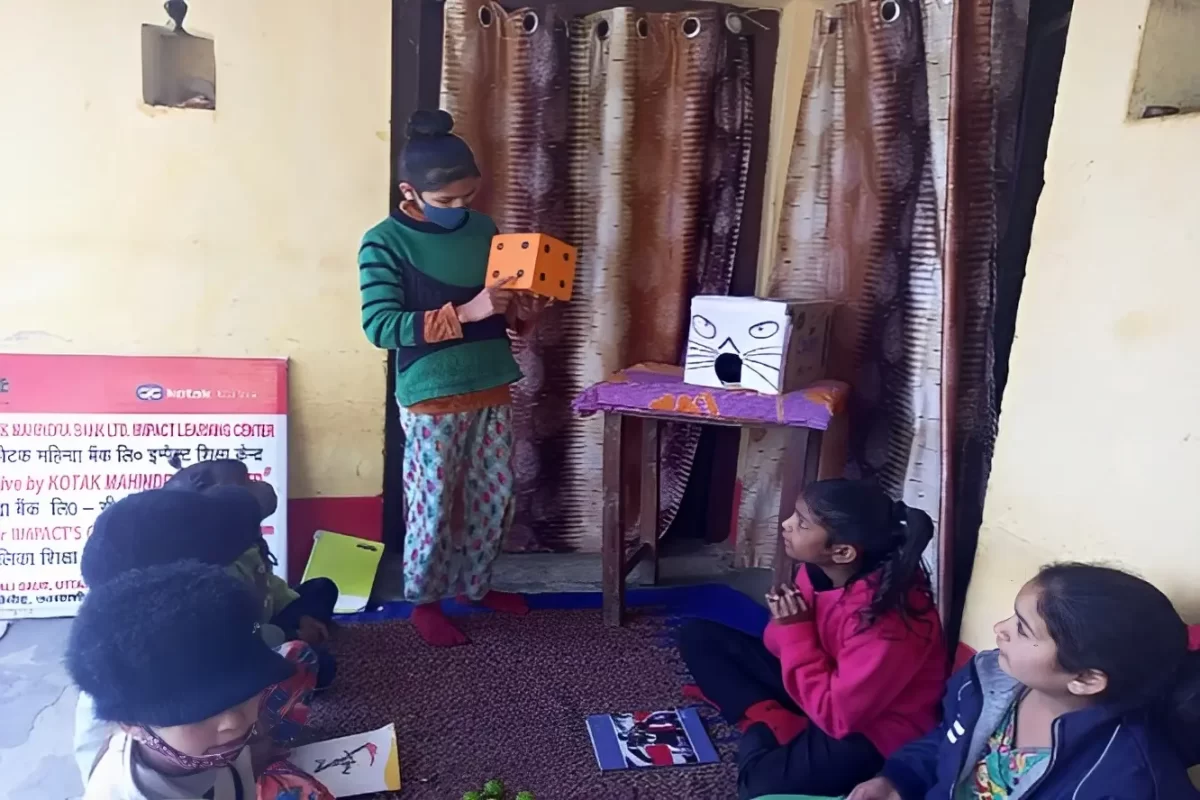
Teaching 30 girls at the same time proved to be a challenge for Deepa. She had to figure out how to contact parents to send their children to the center and devise a plan for the students. She reached out to other teachers who were already working in other centers and received their support. Deepa joined the girl child education program on 1 January 2018 and has enjoyed working with children and communities. She has learned many techniques and processes in quarterly teacher’s training, MTM, and study circle meetings. Deepa attended a five-day training program where the trainer taught her various teaching methods, which she implemented with the children in the center.

When Deepa started teaching, she noticed that many children were weak in Maths, English, and other subjects. She met with the children’s parents and encouraged them to send their children to the center regularly. She followed the daily plan and taught the children according to their level of understanding. She kept parents informed of their children’s progress through report cards given during CMC meetings and door-to-door visits.

Conclusion

Deepa’s dedication to teaching and her willingness to learn has enabled her to improve her skills in the girl child education program. Her experience shows that with hard work, dedication, and a passion for teaching, one can overcome challenges and make a significant impact on children’s education.

Community Seed Bank: Empowering Sustainable Agriculture

Introduction:

A Community Seed Bank is a vital component of community agriculture, encompassing local gardens or fields where traditional varieties are safeguarded. This system empowers farmers in the creation, maintenance, and promotion of crop genetic diversity. Seed banks serve as repositories of local genetic diversity, adapted to prevailing climate conditions and resistant to crop pests. They enhance resilience, food security, and the benefits of sustainable agriculture, making them indispensable for a prosperous and ecologically balanced future.

Community Seed Bank: Concept And Practices

Community Seed Banks exemplify sustainable agriculture’s power to envision a resilient and prosperous agricultural future. They are locally governed and managed collective-action institutions, primarily responsible for preserving seeds for local use. Their mission involves conserving, restoring, revitalizing, strengthening, and enhancing plant genetic resources for food and sustainable agriculture. This effort extends to local varieties, major and minor crops, as well as neglected and underused species. Across the globe, Community Seed Banks empower farmers and communities, enabling them to regain, maintain, and expand their control over the seeds they rely on. This often results in enhanced cooperation among farmers and other stakeholders such as plant breeders, agricultural researchers, and gene bank managers, all committed to conserving and sustainably using agricultural biodiversity.

Local varieties often serve as the primary source of planting material for small-scale farming, playing a crucial role in adapting to local environmental conditions. Community Seed Banks promote on-farm conservation by collecting and preserving locally adapted seeds, typically underserved by formal seed systems and markets. Preserving landraces and farmer’s varieties is essential as they harbor traits like resistance to biotic and abiotic stresses, as well as vital nutritional qualities necessary for productivity. Additionally, Community Seed Banks play a pivotal role in ensuring the availability and accessibility of diverse genetic resources in sufficient quantities during planting seasons.

Objectives of Community Seed Bank

The Community Seed Bank Project has several key objectives:

i) To conserve indigenous and interspecies variation suited to the local ecological niche.

ii) To integrate on-farm conservation through community participation.

iii) Collection, selection, and production of indigenous crop diversity.

iv) Ensuring high-quality seed and planting material production.

v) Reducing farmer dependency on public and private seed supply systems and strengthening farmer-to-farmer exchange networks.

vi) Providing infrastructure for storage facilities and developing a resource and training center for the community.

vii) Encouraging the use of locally adapted seeds to reduce the need for chemical inputs, promoting eco-friendly agricultural practices and sustainable agriculture.

Regardless of scale, establishing and supporting a community seed bank involves a logical sequence of steps that carefully align community interests and needs with seed bank principles and practices.

Establishing A Community Seed Bank

Community Seed Banks often provide training and education to farmers, offering insights into seed-saving techniques, sustainable agriculture benefits, and the significance of crop diversity. The process of establishing and supporting a Community Seed Bank encompasses several major steps. It’s crucial to approach this process systematically, prioritizing human and social aspects before physical infrastructure. A “five-star” community seed bank building is valuable only if farmers are motivated and equipped to utilize it effectively.

There are nine major steps in establishing and supporting a community seed bank:

  1. Situational analysis.
  2. Motivating and organizing farmers.
  3. Choosing crop species and varieties.
  4. Seed health (local quarantine) and seed processing (cleaning).
  5. Seed storage (facility, equipment, and methods).
  6. Registration of new varieties (passport data).
  7. Seed regeneration.
  8. Information sharing.
  9. Monitoring operations and results.

Importance Of Community Seed Bank

Various rural development NGOs actively promote the establishment of Community Seed Banks, preserving genetic diversity, enhancing food security, and supporting eco-friendly farming practices. Collaborations with local communities foster self-reliance and resilience. Community Seed Banks not only encourage the use of locally adapted seeds but also reduce reliance on external seed sources, leading to eco-friendly and sustainable agriculture practices.

How Long Do Seeds Survive In A Seed Bank

Seeds stored in these vaults can theoretically remain dormant for hundreds or even thousands of years, depending on the species. However, these projections are based on models, as we await the first seeds to reach a 10,000-year mark. Best predictions suggest seeds will survive at least 150 years in these vaults.

Worldwide, there are about 1,500 seed banks, including the largest one, the Svalbard Global Seed Vault, located on the remote Norwegian islands of Spitsbergen. Community Seed Banks differ from these massive institutions, operating on a smaller scale within specific communities, which enhances their impact.

Conclusion

Maintaining a healthy and dynamic Seed System is crucial for realizing the benefits of sustainable agriculture. Limited access to innovation and a lack of diversity can lead to agricultural specialization in areas where it is suboptimal. Innovation gaps result in poor-quality planting materials and limited capacity to improve processing technologies for low-income farmers. Community Seed Banks play a pivotal role in maintaining genetic diversity at the community level, benefiting future generations. This grassroots initiative has a significant impact, promoting sustainable agriculture and resilient farming communities.

Livelihood support, Sunaina Devi, HRIDAY programme

“Now! I will help my family to earn more”

Introduction

Sunaina Devi wife of Ramesh Raturi, belongs to Amarsar village. There are 6 members in her family, she lives with her husband, two boys, and her maternal mother and father. Her husband runs a shop in their town. The means of income of the house is only wages under the government scheme like MNREGA, etc., or by working on agricultural land. Sunaina devi works at home and in the fields.

Background

At the beginning of the Hriday program, women farmers groups were formed in the villages of the project area. An open meeting was held with the women farmer’s group members. In the meetings, the members were informed about the various works to be done under the program, out of which seed money support to women farmers to start their own businesses was involved. Right holder (Sunaina devi) is one of the members of the women farmers group from amarsar village. She came to know about the livelihood cooperation support activity. She found this support useful and contacted the facilitators of hriday program.

Mrs. Sunaina devi is skilled in stitching work. She used to stitch clothes before her marriage but after her marriage she got involved in agricultural work and other responsibilities like taking care of her children. she states that she has some free time after doing domestic works, in that period of time she can create additional income at home by doing sewing work.

Findings

Sunaina devi can sew women’s clothes but she does not have the technical knowledge to sew men’s clothes. Apart from this, due to the limited market in the area, there is fear of not getting recognition and proper value for their work.

Sunaina devi showed interest for the sewing work in the monthly meeting with women group members. The self-help group members gave their consent for cooperation and it was decided to give a sewing machine to sunaina devi from their group. Facilitators from the organization obtained the necessary documents from sunaina devi and submitted them to the field office. According to the term and conditions, a modern sewing machine was purchased for sunaina devi.

Conclusion

With the livelihood promotion support given by LIC HFL, Sunaina devi will become a self-reliant woman. With this cooperation, she will be able to help her family economically and will be able to provide better education to her children through her income by doing sewing work.  Apart from this, sunaina devi will increase her sewing work demand in the local market by learning the techniques of sewing men’s clothes by using the modern machine provided as support by MVDA and LIC HFL.Through livelihood promotion activities, many more women from the remote villages of the project intervention area can be made self-reliant so that they can help economically their families.

Words from beneficiary (quotes) –

“With the support of livelihood promotion, now I will help my family to earn more thus I can enable to send my children to a good school.”

SUNENA DEVI
AMARSAR, BHILANGANA BLOCK
TEHRI GARHWAL, UTTATAKHAND
Our partners

Mission Partner