admin
Rajat Negi

Rajat Negi is an agriculturist from Srinagar Garhwal, Uttarakhand, currently residing in Srinagar Garhwal, Pauri District. He holds a BSc. in Agriculture from Dehradun and an MBA in Agribusiness from SHUATS, Prayagraj. Rajat’s professional background includes specialized training in Mushroom Cultivation, Beekeeping, and Nursery Management. He also completed a 45-day training at Indo Organics Pesticides Company in Kashipur, U.S. Nagar. Before that, he gained 13 months of experience in the sales department at IndiaMART Intermesh Limited in Karol Bagh, Delhi.
Devender

Devender is a skilled natural farming trainer and agronomist with a robust background in management, team leadership, capacity building (including natural farming training and exposure visits), grassroots approach (stakeholder and farmer registration), and liaisoning. Currently, I hold the role of District Coordinator/Team Leader for two districts in Himachal Pradesh, Solan and Shimla (officially Solan). His positive approach has enabled me to embrace and overcome new challenges, successfully achieving targets and goals. He loves traveling and exploring new places.
Amit Kumar Giri
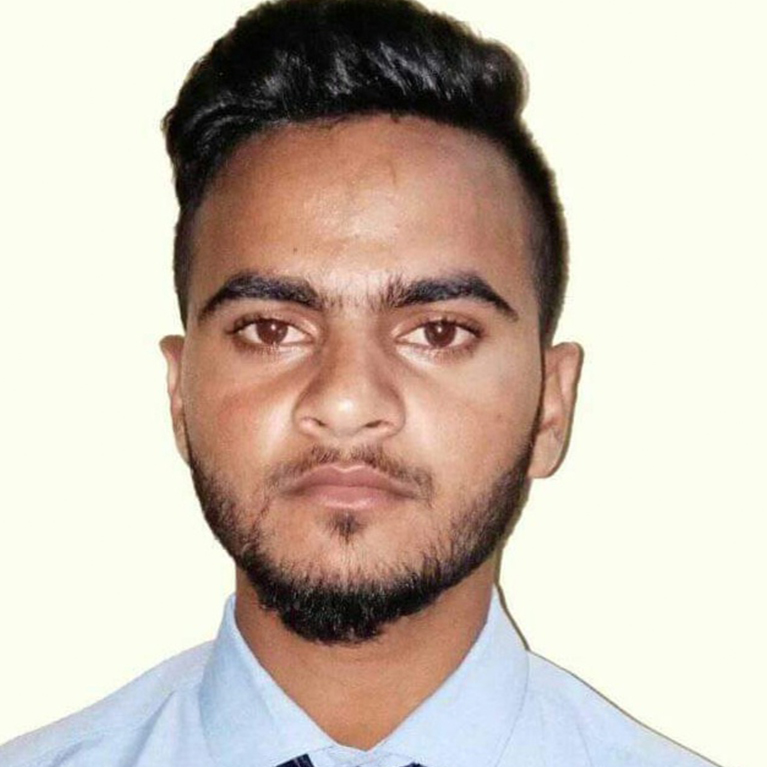
Agronomist with 1.5 years of experience at Vatshal Green Environment Pvt. Ltd. Possessing strong expertise in crop handling and soil management, Amit has successfully assisted farmers in optimizing their crop planting processes and implementing efficient farming practices. His role involved conducting soil analyses, developing tailored soil improvement strategies, and providing hands-on support to enhance crop yield and quality. He is highly adaptable, quick to learn new techniques, and always ready to embrace new challenges in the agricultural sector.
Ayushi Jugran

Ayushi Jugran is well educated and has good knowledge in the fields of organic farming, regenerative agriculture, contract farming, and operations with 10 months of experience. She has very good knowledge of how to deal with farmers and local people and communication skills. She is a team player and very much dedicated to her work. She is thrilled to join the organization MVDA and contribute her goodness to the team so we all achieve our goals and can do something valuable for the farmers.
Request for Quotation – Power Breeder, Goat Farming & Inverter
Request for Quotation – Raw Material for Mushroom Cultivation
Vaishali Negi
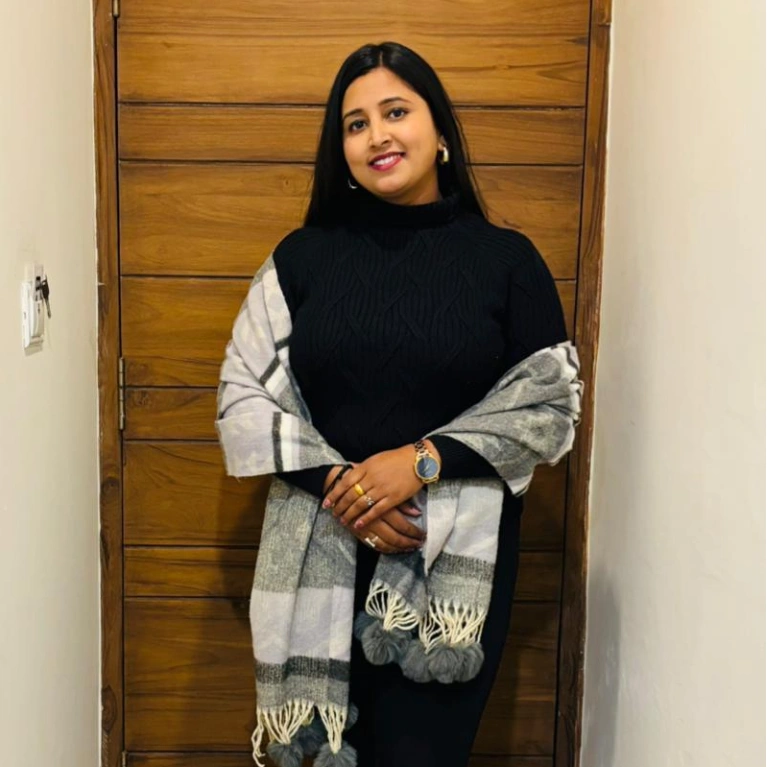
Vaishali Negi is hardworking and professional towards her work. She was born and brought up in Dehradun, Uttarakhand. She holds a graduation degree in Agriculture from S.G.R.R (P.G) College and post-graduation in Agronomy (Agriculture) from Uttaranchal (P.G) College of Bio-medical Sciences and Hospital, Dehradun. She has one year teaching experience as Assistant Professor in Dev Bhoomi Uttarakhand University, Dehradun. She aspires to be recognized as a leader in her field, known for her dedication, expertise, and ability to inspire others. She is committed to making meaningful contributions that advance the goals of our organization and improve the lives of those we serve. She loves cooking and exploring new areas.
Digital Classrooms in Tehri Uttarakhand: Phase 2 Implementation and Teacher Training Experience
In collaboration with LIC Housing Finance and Mount Valley Development Association, we expanded smart classes in 2 more schools of Tehri Garhwal, Uttarakhand. One of these schools is private and has five teachers. While the other one is a government school, which operates with just one teacher.
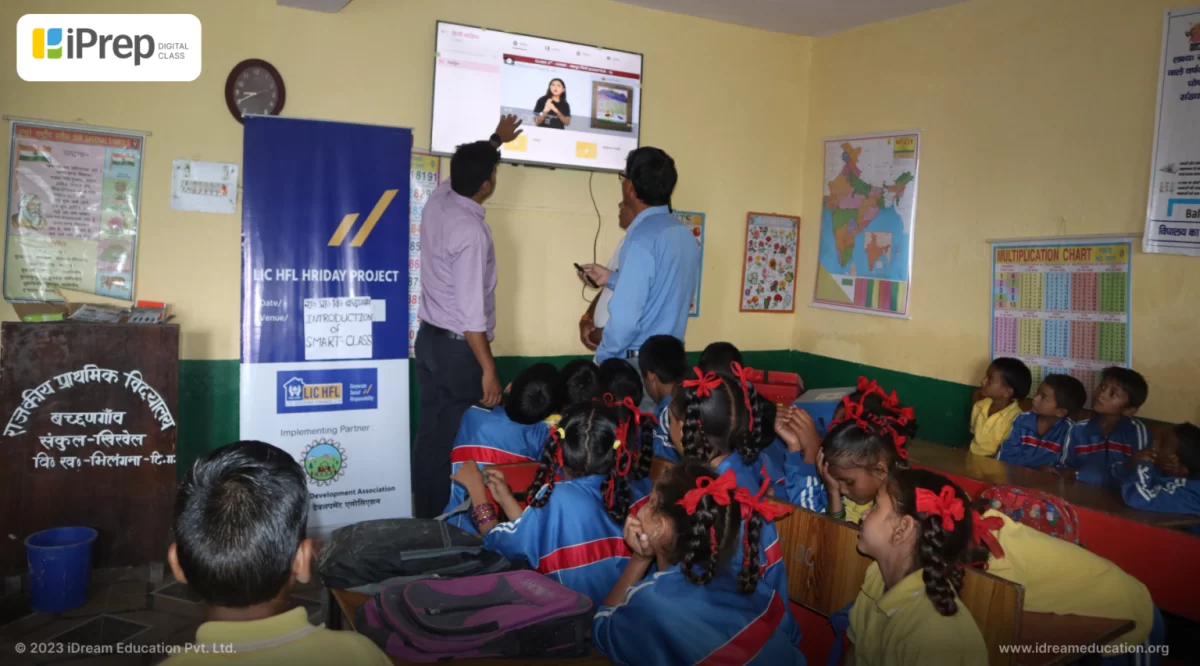
In collaboration with LIC Housing Finance and Mount Valley Development Association, we expanded smart classes in 2 more schools of Tehri Garhwal, Uttarakhand. One of these schools is private and has five teachers. While the other one is a government school, which operates with just one teacher.
In this process of implementing smart classes in Purnanand public school, we came across a unique situation. Our team members were unable to find a technician to mount the 50-inch Smart TV as the school is located on the highest peak of the village. Undeterred, one of our ground team members took this into his hands, showcasing dedication to bringing educational resources to even the most hard-to-reach corners.
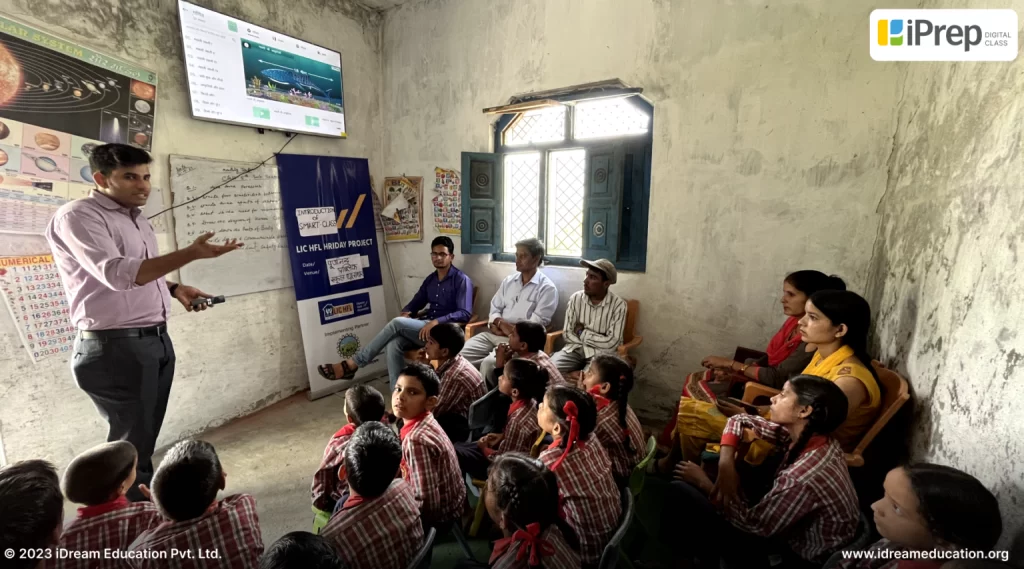
Teachers and students were excited to see how we mounted a smart class in just a few minutes. They were excited to use the smart class content by themselves. This is when our team began with teacher training and started navigating iPrep’s content. Both the schools had access to different classes. As one of the school is primary they had access to offline content of K-5. In second school, teachers got access to offline content for K-12. The content is aligned with the NCERT curriculum and is made available in both English and Hindi. Seeing the smart class content similar to textbooks on the smart TV in their preferred language made the teachers eager to use it.
Reach of Digital Classrooms in Tehri Uttarakhand in Phase 2
- District: Tehri Garhwal
- State: Uttarakhand
- No. of Students Impacted: 500+
- No. of Teachers Impacted: 20 +
Inspiring highlights from implementation and training
- The government school, with only one teacher, serves as a common hub for students from three to four nearby villages.
- Teachers of the schools were happy to see smart classes in their schools. Many of them said, “Smart classrooms will help us facilitate interactive classroom experience for students. Moreover, “The accessibility of content similar to textbooks will help us transition from teaching through textbooks to smart classroom content smoothly“
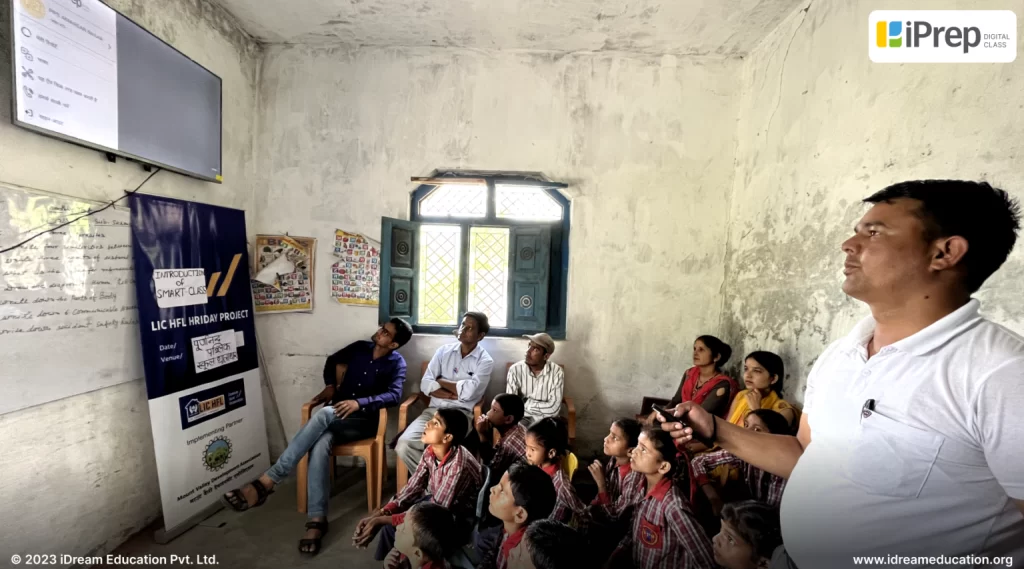
Our team also visited schools where we implemented smart classes in phase 1 to see how iPrep is being used by teachers and students. The visit was quite motivational where teachers shared their thoughts on how iPrep is helping them engage students in learning. They talked about how attendance at schools has gone up since they started using iPrep Digital Class.
One of the teachers, Sir Teja Singh expressed his trust on iPrep Digital Class saying “Engaging students in continuous learning has always been a point of concern for us because of many reasons but with the availability of smart classes, it has become easy for us to teach, engage and comprehend”.
Happy to hear and hope to see similar engagement and improvement in phase 2 implementation. If in case you would like to know more about our digital learning solutions, visit our website, www.idreameducation.org, or write to us at share@idreameducation.org